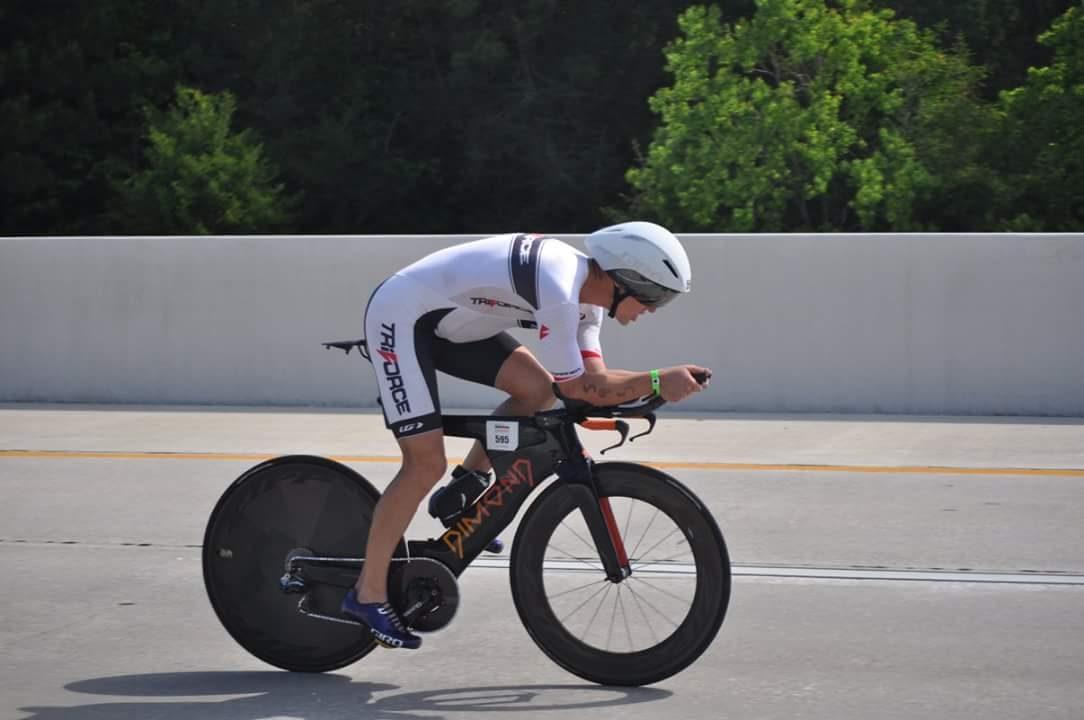
Ironman Texas 2018
Sub-9, With 36 Seconds to Spare
The Experiment
I came back to The Woodlands with a question. In 2017 I'd taken a minimal approach: no swimming until three weeks out and about 13 to 15 hours a week in the final build. I finished in 9:12 and qualified for Kona.
In 2018 I went all in. I averaged 20 hours a week in the final build, swam a lot, and was in the best swim shape and best bike shape of my life. My run was decent too, despite an injury that sidelined me for 10 days about four weeks out.
The conditions were similar to 2017, apart from a hotter run. The goal was to get some quantitative data on how much difference going all in would make compared with minimal.
Race Morning
Logistics were easier this time. I stayed at the Westin, within walking distance of T1. Breakfast was the usual bagel with almond butter, plus Sportea, a tea I discovered by accident that had become a training and racing staple.
In T1 I pumped the tires to 95 psi and loaded up: iced Sportea between the bars, my maltodextrin, fructose and ginger beer blend on the downtube, and gummy worms in the bento box.
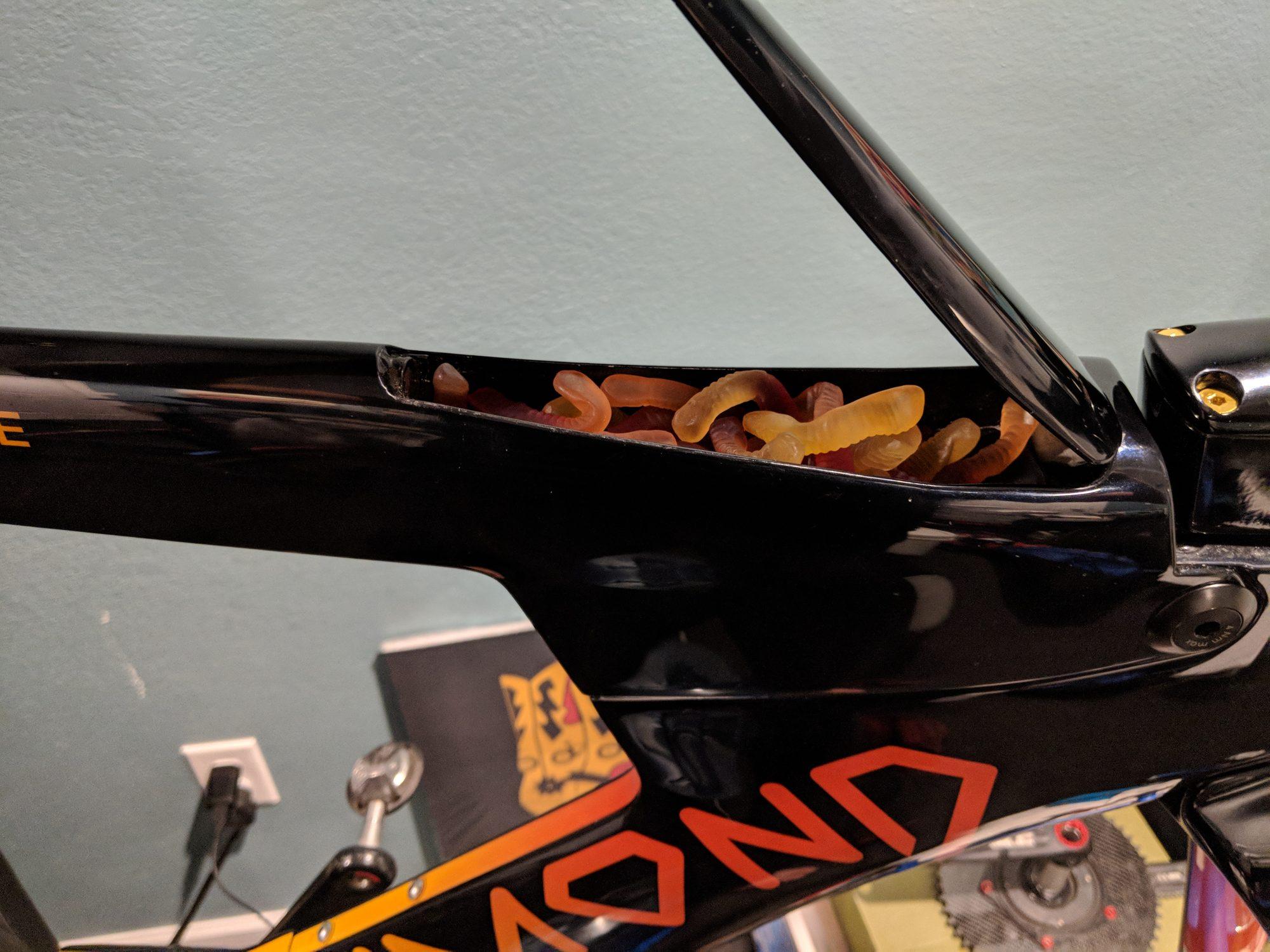
Like 2017, the walk to the swim start took longer than I'd like, and I seeded myself about six rows back.
Swim: 57 Minutes
This one was wetsuit-legal, unlike 2017, which makes the comparison a bit tricky. But my wetsuit and non-wetsuit times have always been within about a minute of each other.
After some commotion at the start, I settled in and swam alone the whole way. With about 500 meters to go, I noticed one of my athletes, George, two meters away.
Being the terrible coach that I am, I sprinted him for the line finishing about 8 seconds ahead.
I can't let my athletes get complacent.
I came out in 57 minutes, eight minutes faster than 2017. Conclusion number one: swim training does actually pay off.
Bike: The Flat and the Pacelines
I didn't see my swim time, but the clock showed exactly one hour since the gun as I got on the bike, so I knew it had gone well. I was riding about 280 watts and it felt easy. The pacelines hadn't formed yet, so it was plain sailing.
Just before the toll road, I came up behind a Latin American group: about 15 riders from Colombia, Argentina and Brazil, with names and flags on their kit, in a very tight paceline. I surged to pass them in one go, but they stuck to my wheel for a few minutes. Finally I used a few 600-watt micro-bursts, the kind Matt Bottrill had me doing in training, and dropped them. An hour in, my average was 265 watts, a bit higher than planned, thanks to dropping the Colombians.
Three minutes into a turn at the front of a small, legal group, I heard the dreaded thump. I'm prone to ghost flats, so at first I hoped I was imagining it. I looked down and it was as flat as a pancake. Dammit.
The sealant in my tube didn't seal it, so I changed the whole thing, carefully, because I only had one CO2 cartridge left. It took about 10 minutes. Sam Gyde and Dan Stubleski, who I'd hoped to ride with, both went past, then a few pacelines, and I knew it would be hard to get back past them.
Back on the bike, I found a group of about 20 who could have legally helped each other if they hadn't been riding like idiots. They'd pass me, sit up, force me to slow down, and accelerate when I tried to go by. After 15 minutes of that I put in some big efforts and rode away from them for good.
I was annoyed, less about the drafting and more because all those surges were wrecking my experiment. In hindsight, I could have sat 12 meters off the back of one of those groups at about 180 watts, instead of 265 to 280 on the front with surges to 360 to get past.
For the final 10 miles I was completely alone, apart from passing Caroline Gregory close to T2.
My final split was 4:32 at 240W normalized, almost identical to 2017. Before the flat, I'd been on track for around 4:16, and my early splits were a bit faster than Sam Gyde's, who rode 4:18. Take the flat out and it was probably 4:22. I was on a smaller Dimond with a much better-optimized position, which helped too.
Run: Digging for Seconds
The plan was 7:15 per mile and a sub-3:10. In training I'd been running 6:50s easily.
I was bang on 7:15 for the first 10 miles. Then, from one mile to the next, it went from feeling super easy at 7:10 to super hard at 7:40. I held about 7:45 for the next 10 miles and couldn't do much about it. I'm convinced the spiky bike ride caused it.
Near the end, I realized that if I pushed, I could go under nine hours. I had to dig really deep. I timed it perfectly and crossed the line in 8:59:24, with 36 seconds to spare. Even with the fade, my run was eight minutes faster than 2017.
The Verdict
The extra training made me 13 minutes faster than 2017. Add back the flat and it's closer to 23.
I think 23 minutes is definitely worth the extra work. Thirteen might be, depending on your goals. The faster you are, the more 13 minutes means. Personally, for me it's worth it. I later wrote about why sub-9 took me so long in The Expression Deficit.
I'm fortunate to have set my life up so I can train a lot without it affecting my family. If you're sacrificing a lot personally just to get in 20-plus hours a week, you can still do very well on much lower volume with a focus on quality.
This is the kind of thinking that goes into every training plan I write.