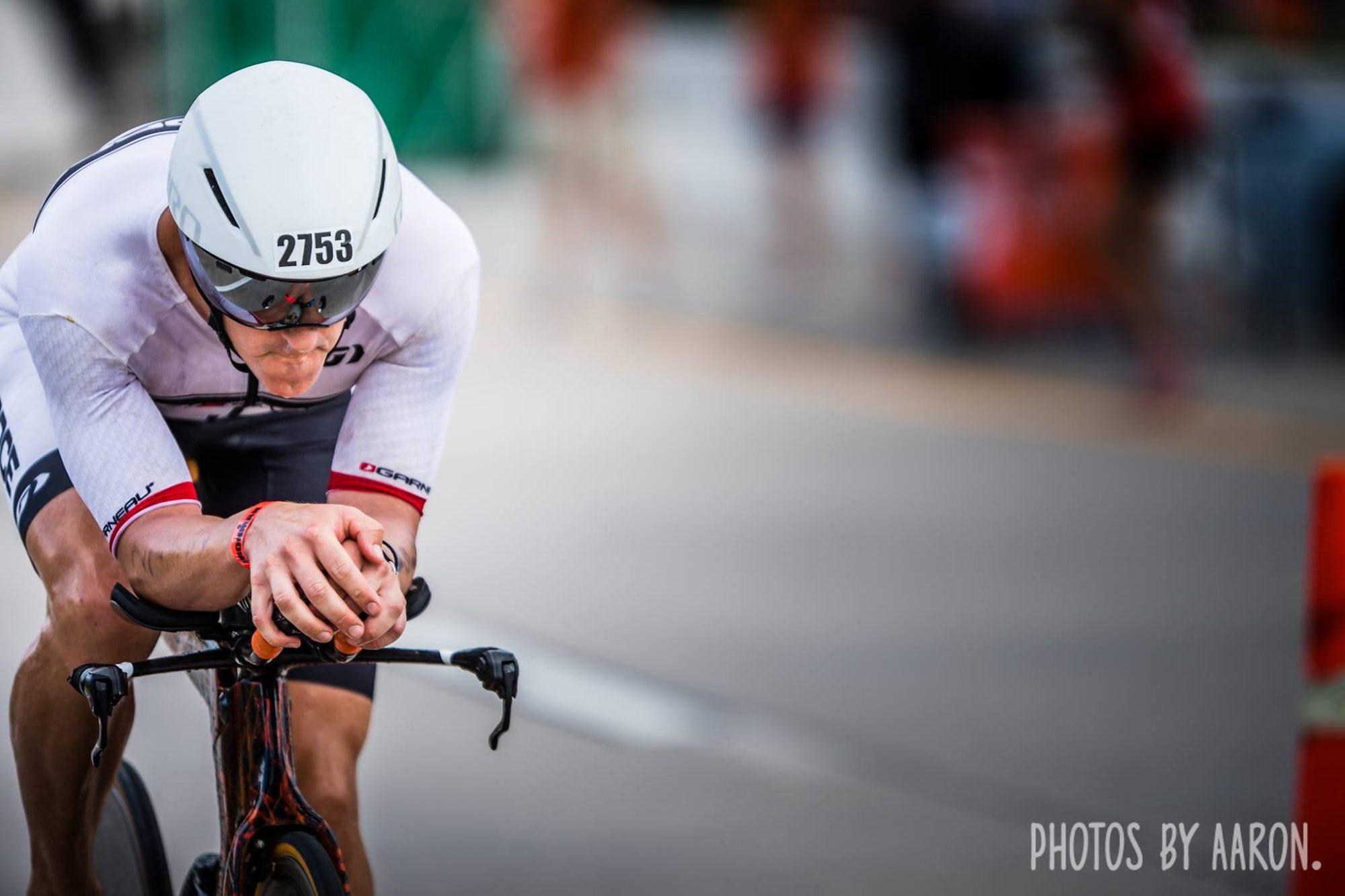
Ironman Texas 2017
A Kona Slot on Almost No Swimming
A Day I Didn't Expect
People often say "I didn't quite have the day I expected," and they usually mean it went badly. I had a day I didn't expect because it went better.
On the face of it, this looks like a great result on very little training. There's a bit more to it than that. It's a good example of what I call a high-priority focus strategy: do only the most important things, and pretty much ignore everything else.
For me, from January to April 2017, that meant three decisions.
- Fix the bike. It's my strength, but after taking all of December off, my FTP was low. Left alone, the bike would become a liability. So I started riding regularly and focused there.
- Train the run at race pace. With two Ultramans behind me in 2016, I already had plenty of slow miles in my legs. Instead of weekly miles, I focused on weekly miles at race pace: two Ironman or 70.3-pace sessions a week, the rest easy.
- Skip the swim. I didn't see any value in spending many hours in the pool, only to gain three to five minutes in an Ironman. I averaged about 1,500 meters a week, against my usual 15 to 20 kilometers.
Pulling the Trigger
I'd spent the first part of the year on my race weight project, where the goal was weight loss, not performance. I was almost certainly not going to race Texas.
Then, in the last three weeks of that project, which happened to be the cake phase, my FTP jumped from 281 to 313 watts. That was a much bigger jump than usual, and a signal that I could at least ride well. So I entered Ironman Texas 10 days out, as a big supported training day.
The run was an unknown. I hadn't run further than 14 miles all year, at about 22 miles a week, mostly shorter sessions like 8 x 1 mile at 6:45 pace.
The swim was the real problem. On April 10th my 100s were 15 seconds slower than race-ready and my 200s were coming in around 3:25 instead of 2:55. Luckily my swim form comes back quickly. I aimed for 4km every day. On the 14th I joined my masters group but dropped down from my usual 1:30 lane to the 1:40 lane, and made it to the end. By the 17th I was back in my normal lane, swimming 200s in 2:45 and 100s in 1:22.
My best-case estimate was a 1:05 swim, 4:40 bike and 3:30 run. One of my athletes, Fred, promised me a good bottle of Brunello if I broke 1:05 on the swim. I'd be thinking about that a lot in the lake.
I didn't taper at all. I didn't have the fitness base to justify it, and two travel days were rest enough.
Swim: 1:05
It was a long walk to the swim start, and I made it with about three minutes to spare. It was a non-wetsuit swim, and I seeded myself four rows back.
Everyone around me looked like good swimmers, which is usually a good sign. I went through 2km in exactly 30 minutes and thought the Brunello was in the bag. Then we turned into the canal toward the exit, and it took forever.
I left the water in 1:04:45, took about 10 seconds to reach the timing mat, and crossed it with 1:04:58 on my Garmin. Two seconds to spare. But the official time was gun time, not chip time, and that put me two seconds over Fred's Brunello benchmark. I only found out after I finished.
In T1 I saw Derk, one of my athletes, right behind me. He usually swims 58 or 59 minutes, so I felt better about my own swim. It turned out he felt better about his too, seeing me. We were both reassured by our mutual poor swims. Derk went sub-9, so his swim didn't matter much in the end.
Bike: 4:31
As usual, I attracted "Kona guy." He muscles past you, grimacing, then slows down in front of you. You pass him, and he can't stand being passed, so he goes again. Eventually I let him go and sat 12 meters behind him until mile 50. It felt too easy, but it was less taxing than a cat-and-mouse game. At the far turnaround I put the gas down, dropped him and rode alone for the rest of the day.
By the end, I was only seeing female pros and the odd struggling male pro, like fellow Ultraman Peter Kotland. In the last seven miles I came up on what I thought was the front of the age-group race. It was the lead group of female pros. To avoid a drafting penalty I had to pass the whole group in one go, a hard 40-second effort. A bit further up the road I passed the eventual women's winner, Jodie Robertson, who was riding hard and looked extremely comfortable.
I was really happy with my pacing. It built through the ride:
- First 90 minutes: 233W normalized
- Second 90 minutes: 241W
- Third 90 minutes: 247W
That came to 4:31 at 240W normalized and a variability index of 1.03. The course was a bit short at about 110 miles, and T2 snuck up on me so unexpectedly that I hadn't unclipped yet.
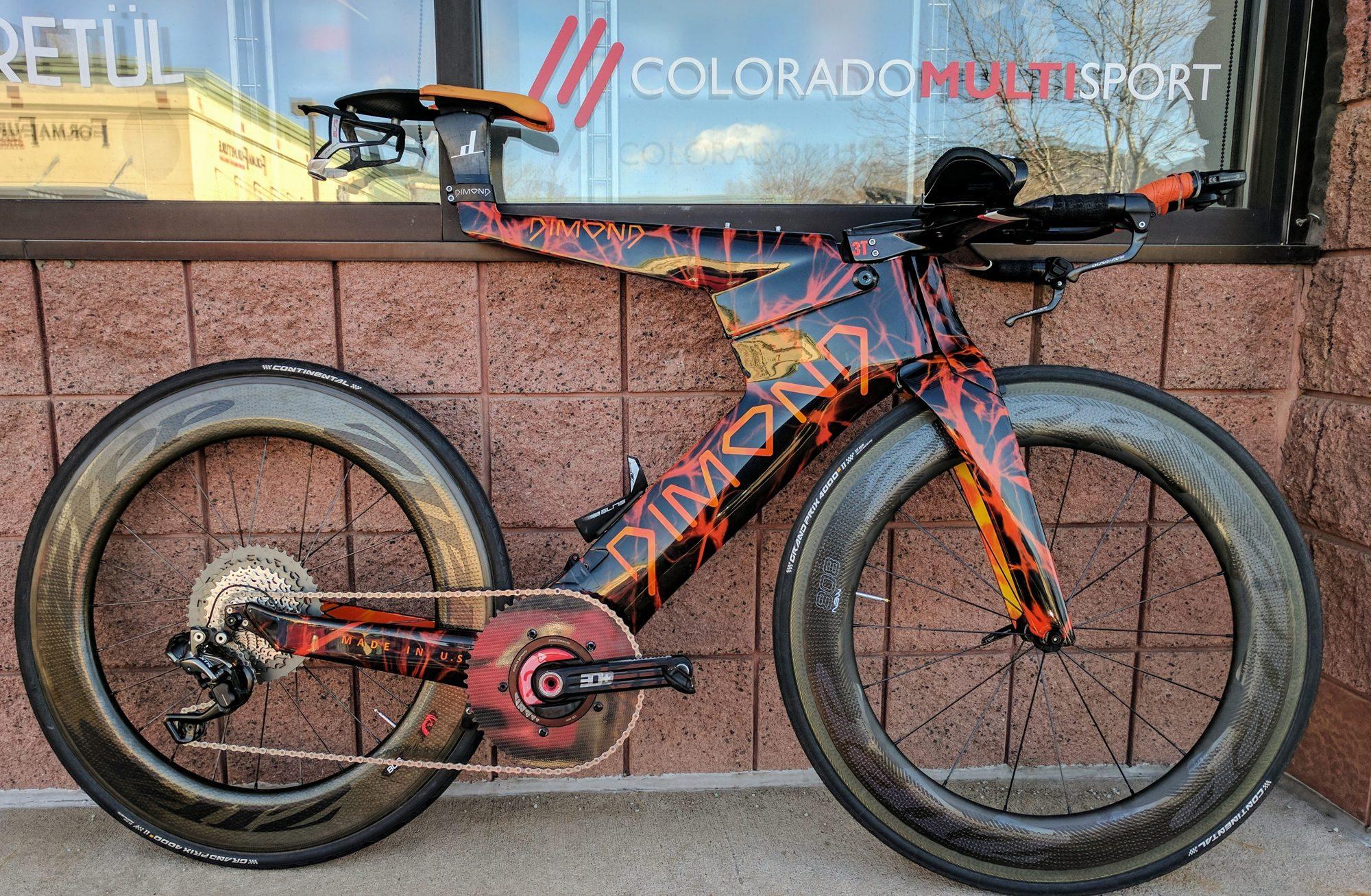
I also tested a new 1X drivetrain: a single 56-tooth chainring with an 11-40 cassette. I never went past the 21 on the back here, but I'd need the range at Boulder. It worked fantastically.
Run: Just Keep Moving
I aimed to start at 7:45 to 8:00 per mile and went through mile one in 6:50. It felt super easy, so I ran by feel. One by one, the female pros ran past me, and it was fun watching their race unfold.
By mile 10 I was averaging 7:24, and for a moment I was tempted by sub-9. A 7:30 average would get me there. But special needs slowed me down. To be fair, there was a Starbucks Frappuccino waiting in my bag, so it was worth it. By mile 11 I was back to treating it as a training day.
Derk passed me around mile 11 looking great. He ran 3:01, the slacker. It's so rewarding when an athlete you coach outperforms you on race day, far more than performing well yourself.
I just hung in there at a relatively slow pace, happy not to be walking given my lack of long runs. The Woodlands run course is now one of my favorites. It winds through shaded woods and along the canal, and the crowds are incredible. One of my Ultraman athletes, Amy, was out volunteering, so I got to see her several times. Her husband John was at Catapult Corner, where there's so much atmosphere you can't help but be catapulted through.
Just before the finish I saw Brian, another of my athletes, on his second lap and looking strong. He'd been ill for three weeks not long before, but I knew he was going to make it.
A big part of endurance racing is mental, and Ultraman set me up to finish this race on far less training than I should have needed.
My total quad failure at Ultraman Worlds was still fresh in my mind, so any discomfort I experienced during the IMTX was inconsequential compared to that.
Third
I crossed the line with no idea of my place or time. I guessed somewhere around 7th or 8th. It was a huge surprise to find out I was 3rd in M40-44, which meant my fifth consecutive year qualifying for Kona.
With the bike focus, I was able to lay down a great bike split and set myself up for a comfortable Kona slot with a relatively average run. Everyone else in the age-group top 10 ran under 3:25.
Nutrition summary
- Race week: no low-carb phase this time, since I didn't taper. A big carb load Thursday and Friday, including my newly discovered carb-loading food, angel food cake. A burger and fries the day before.
- Race morning: pre-soaked oatmeal, a bagel with almond butter and honey, and four Ensure shakes, with nothing after 4:30am.
- Bike: about 2,600 calories in 4.5 hours, roughly 550 an hour after spillage. My maltodextrin, fructose and ginger beer mix, plus cola chews and organic gummy worms. In Boulder, it's well known that organic gummy worms are much faster than regular ones.
- Run: about 650 calories, around 185 an hour, which is roughly my limit while running. Gels, tabs and a can of Starbucks double-shot mocha from special needs.
A year later I came back to Texas with a full training load to see what the extra work was worth. The answer was 8:59.
This is the kind of thinking that goes into every training plan I write.