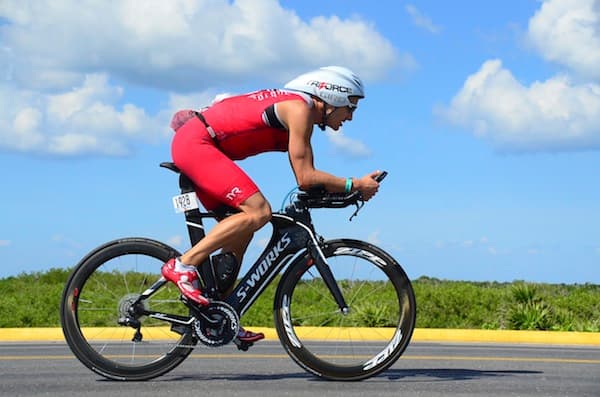
Ironman Cozumel 2012
DNF. The Race That Changed Everything
Best Shape, Worst Timing
Going into Cozumel I was in the best shape of my life. By the numbers, I was projecting a time in the low 9s: swim around 59 minutes, bike at 240 watts for a 4:40 split, run at 7:00-7:10 per mile for a 3:10 marathon.
The preparation was significant. I put in 15-20K of swimming, 40 miles of running, and most of my bike training on an indoor trainer in the aero position every week. Most weeks were 20-plus hours, meaning I often got up at 4am. I had no social life. I obsessively carried hand sanitizer everywhere.
This was my comeback race. Five weeks before Ironman Coeur d'Alene earlier that year, I'd been hit by a car and broken two ribs. I still raced, but missed a Kona slot by 15 minutes. Cozumel was meant to be redemption.
I arrived early to reduce travel stress. I brought all my own pre-race meals, only drank bottled water, and even brushed my teeth with bottled water.
The preparation was perfect.
Then Everything Changed
Two days before the race, my one-year-old son was up all night vomiting. It lasted less than a day. My wife got violently ill on Friday night and couldn't move all of Saturday. I was still feeling fine, though at the back of my mind I had a sinking feeling.
By 6pm Saturday I really didn't feel well. I went straight to sleep without eating. I woke at 11pm with a bloated gut, weird since I hadn't eaten in over 8 hours. Then it hit. I spent most of the night on the toilet.
At 4am I couldn't face solid food. I drank two pre-made Starbucks frappuccinos (400 calories total) and took two Immodium. I was determined to at least complete the swim and attempt the bike. I couldn't let all this prep go to waste without even trying.
Swim: 1:10
The course had a brutal current. Against it on the first leg: 1:52 per 100 yards. With it on the back straight: 1:02 per 100 yards. Against it coming home: 2:20 per 100 yards.
I was shocked to see 1:10 on the clock. One of my worst IM swim times ever, in the best swimming shape of my life. My coach Kevin shouted that it had been a very slow swim for everyone, and I was still in the top 10%.
In T1, I got on the bike and started riding before realizing I still had my swim skin on. I tried to look on the bright side: at least it was probably quite aero.
The Bike: Unraveling
I was struggling to hit my power numbers. 240 watts usually feels easy and I was working hard just to get near 230. My speed was still good, just under 26 mph at less than 220 watts, so I rode by feel instead.
I went through 56 miles in 2:25, still in contention. Then it fell apart.
I couldn't keep anything down. Water came back up. Bars came back up. EFS came back up. I started bloating badly. I could no longer stay in the aero position. Then desperation kicked in.
At the aid station, a porta-potty visit was like armageddon. I literally exploded. I have no idea where it all came from. I'd been on the toilet all night and hadn't eaten in over 20 hours.
For the rest of the ride, it was the same cycle on repeat: take in water or food, some comes back up, stomach bloats, stop for toilet. Each lap got progressively worse: 205 watts, 184 watts, 155 watts. Average speed dropped from 23 mph to 17.5 mph.
Bike time: 5:38.
The Decision
About halfway through the final lap, I decided I would not start the run. I was severely dehydrated and running on zero fuel. A marathon would not only be miserable but dangerous.
I limped through the final miles, relieved to be done.
After
The next day I still couldn't keep anything down. On Tuesday afternoon, 48 hours after the race, I finally managed to eat something. A 48-hour stomach virus on the only two days that really mattered.
To say I was disappointed is an understatement. But within a few days, I was online, booking my spot at the inaugural Ironman Los Cabos. I would return fitter than ever.
I called it my Mexican Revenge.
This is the kind of thinking that goes into every training plan I write.